Somali Police Arrest Soldier in Killing of Mogadishu Bajaj Driver: What You Need to Know
Motorcycle taxi drivers are among the most vulnerable workers in Mogadishu, often navigating insecurity, checkpoints, and tense encounters simply to earn daily income. Incidents involving armed personnel and civilians have repeatedly sparked public anger, with communities demanding justice rather than silence or impunity.
For many residents of Dayniile district, the news brought a mix of grief and guarded relief. Somali police say they have arrested a soldier accused of killing a young motorcycle taxi driver—a crime that has shaken the local community and renewed calls for accountability.
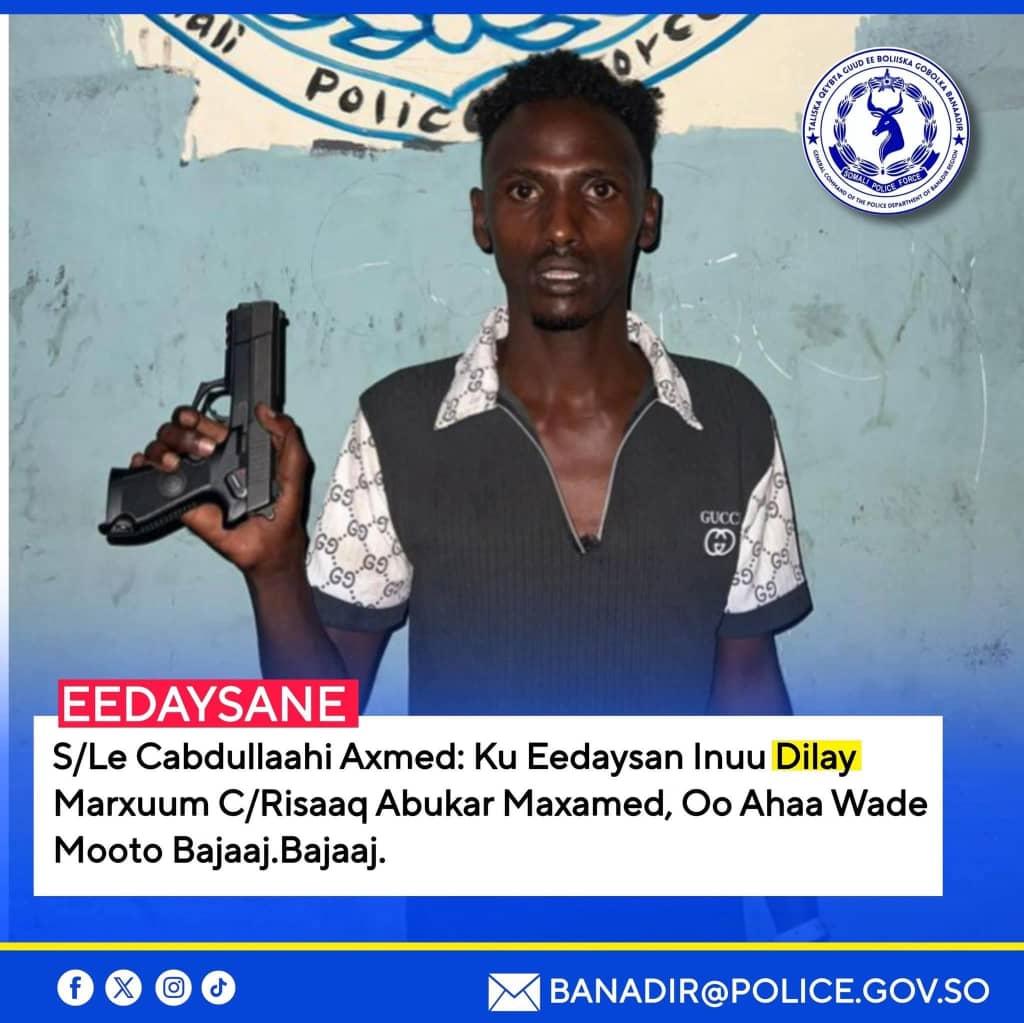
The Somali Police Force, based at the Dayniile District Police Station, confirmed the arrest of Second Lieutenant Abdullaahi Ahmed Geedi, who is accused of killing Abdirisaq Abukar Mohamed, a civilian motorcycle taxi driver, commonly known as a bajaj driver.
The killing took place in Dayniile district, on the outskirts of Mogadishu, according to police officials.
The victim, Abdirisaq Abukar Mohamed, was a young man earning a living through motorcycle taxi work—one of the most common livelihoods for youth in the capital. The suspect is a serving member of the security forces, a fact that has intensified public attention and concern.
Police officials said the suspect is now in the custody of security authorities.
The incident occurred in Dayniile district, Mogadishu, and the arrest was announced on December 16, 2025, following initial investigations.
Motorcycle taxi drivers are among the most vulnerable workers in Mogadishu, often navigating insecurity, checkpoints, and tense encounters simply to earn daily income. Incidents involving armed personnel and civilians have repeatedly sparked public anger, with communities demanding justice rather than silence or impunity.
The arrest signals an effort by authorities to reassure the public that no one is above the law, even within the security forces.
According to police officials, investigations are ongoing to establish the full circumstances and motive behind the killing. The Somali Police Force confirmed that the suspect will be transferred to the competent court to face legal proceedings in accordance with the law.
Police commanders reiterated their commitment to strengthening public security and holding accountable anyone involved in crimes against civilians.
Security officials also urged residents to cooperate with law enforcement, emphasizing that community support is essential to maintaining safety and preventing further violence.
For the family of Abdirisaq Abukar Mohamed, the arrest does not erase the loss—but it offers a first step toward justice. For the wider public, it sends a cautious message: accountability is possible, even in a system long criticized for failing ordinary citizens. As the case moves to court, many in Mogadishu will be watching closely, hoping the law speaks louder than fear.