Somalia Names Maryan Qasim to Lead First Human Rights Commission
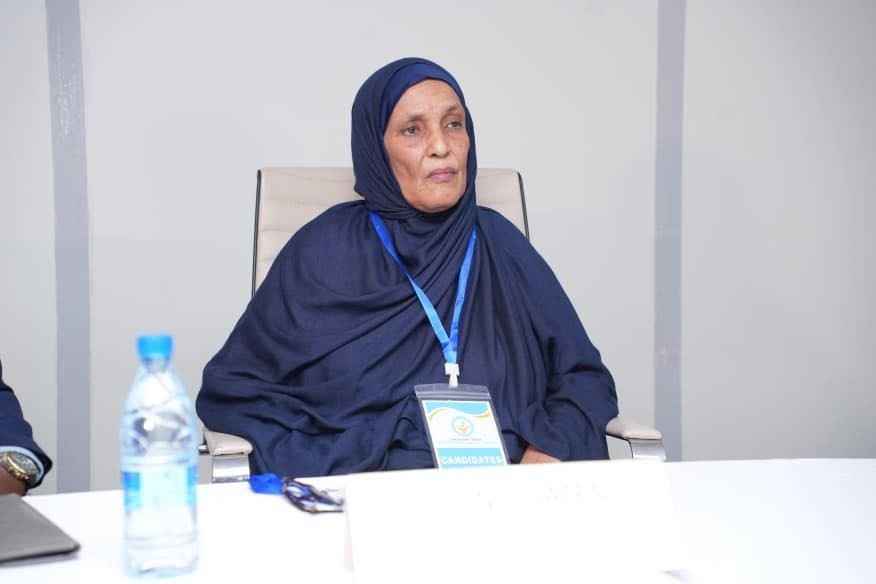
Somalia has appointed veteran politician and doctor Maryan Qasim Ahmed to chair its first Independent Human Rights Commission, a key step in building accountability and aligning with international rights standards.
Somalia has appointed veteran politician and medical doctor Maryan Qasim Ahmed as chairperson of its first Independent Human Rights Commission, marking a milestone in the country’s efforts to strengthen accountability and align its institutions with international human rights standards.
The appointment places Qasim at the helm of a newly established national body mandated to monitor, investigate, and report on human rights violations across Somalia. Officials say the commission will operate in line with the Paris Principles, the United Nations framework that sets benchmarks for the independence and effectiveness of national human rights institutions. Nine commissioners were appointed in July 2025, completing the leadership structure of the body.
The move comes as Somalia continues a broader push to rebuild state institutions after decades of conflict, political fragmentation, and weak rule of law. Human rights groups have long called for an independent mechanism capable of documenting abuses, engaging state authorities, and providing credible reporting to both domestic and international stakeholders.
Qasim brings decades of public service and professional experience to the role. Born into a family from the Barwani community, she trained as a medical doctor and specialized as an obstetrician and gynecologist. Over the course of her medical career, she lived and worked in Somalia, Yemen, the Netherlands, and the United Kingdom and also served as a university lecturer.
Her transition into national politics began in 2010, when she was appointed Minister of Women’s Development and Family Affairs in the Transitional Federal Government. She served as part of the cabinet led by Prime Minister Mohamed Abdullahi Mohamed, later president, during a period when Somalia was attempting to move away from transitional governance toward more permanent federal institutions.
In April 2012, Qasim was elected chairperson of the Tayo Political Party, a Mogadishu-based political association founded by Mohamed Abdullahi Mohamed. Later that year, in November 2012, she was appointed Minister for Human Development and Public Services in the newly formed Federal Government of Somalia. The role combined several major portfolios, including education, health, labor, youth and sports, and social affairs.
During her tenure, Qasim oversaw the launch of the Health Sector Strategic Plans, a nationwide framework designed to rebuild Somalia’s health system and expand access to basic healthcare services. Valued at approximately 350 million U.S. dollars, the plan aimed to improve health infrastructure, strengthen human capital, and increase funding for essential services, with international partners supporting implementation during a transitional phase.
Her term ended in January 2014 following a cabinet reshuffle that split the broad ministry into several separate portfolios. She returned to government in March 2017, when she was appointed the country’s first Minister of Humanitarian and Disaster Management, a role created in response to Somalia’s frequent exposure to droughts, floods, and other humanitarian crises.
As chairperson of the Independent Human Rights Commission, Qasim is expected to lead efforts to establish the body’s credibility, operational capacity, and independence. The commission’s mandate includes engaging with government institutions, civil society organizations, and international partners while providing objective assessments of the human rights situation in the country.
Observers say the success of the commission will depend on its ability to operate without political interference and to translate findings into meaningful policy reforms. For Somalia, the appointment signals an attempt to institutionalize human rights oversight and demonstrate commitment to international norms as the country continues its long and complex process of state-building and governance reform.