The Rotten Core How Corruption Undermined Somalia’s First National Safety Net
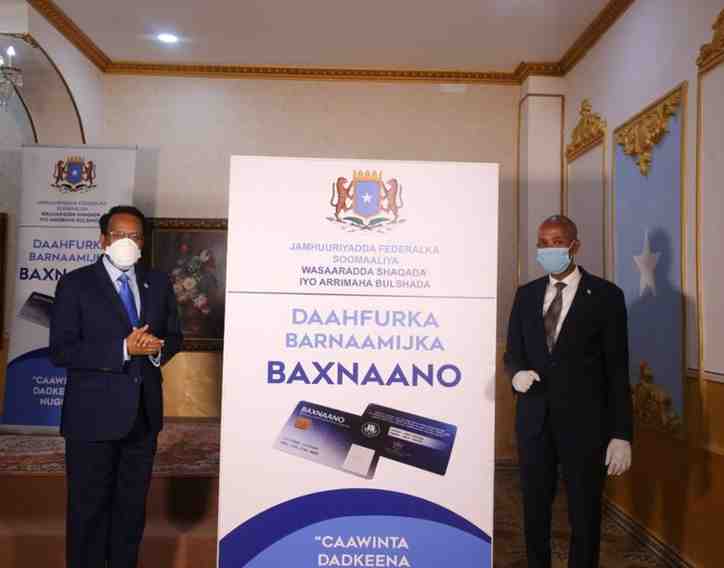
Somalia’s first national safety net, Baxnaano, has effectively collapsed after donor suspensions over alleged corruption and mismanagement, cutting off cash support and jobs for millions of vulnerable people.
For a brief moment, Somalia appeared to be building something rare: a functioning national social protection system.
Launched in 2020 under President Mohamed Abdullahi Farmaajo, Baxnaano—Somali for “escape from poverty”—was the country’s first nationwide safety net. Funded largely by the World Bank and other donors, it aimed to provide direct cash transfers to roughly four million people, link vulnerable households to health and education services, and offer employment pathways for young people in a country battered by conflict, drought, and displacement.
Early assessments looked positive. A World Bank review this year described Baxnaano as a cornerstone of resilience. Individual success stories reinforced that optimism: pastoralists rebuilt herds, families repaired homes, and modest cash transfers in fragile regions produced tangible benefits.
By early 2026, the program was still receiving significant financing. In January alone, roughly $115 million was allocated for employment and social assistance components tied to Baxnaano.
Allegations of Systemic Abuse
Audits and donor reviews began flagging extensive irregularities. More than $153.8 million in payments were marked as suspicious or improperly documented. Beneficiary lists were reportedly manipulated—entire clans were excluded while politically connected households were prioritized. In displacement camps, gatekeepers allegedly demanded kickbacks from recipients.
At the center of repeated allegations was Yusuf Hassan, Director General at the Ministry of Labour and Social Affairs since 2019. Despite the dismissal or replacement of at least three ministers overseeing the program—Yusuf Mohamed, Mohamed Elmi, and Osman Libaax—the Director General remained in office throughout.
Donor officials privately questioned how a single bureaucrat could retain such influence amid mounting red flags, while ministers cycled through without implementing meaningful corrective action.
Officials have not explained the audit findings. Several contacted for this story did not respond.
Donor Confidence Collapses
By late 2025, donors had clearly run out of patience. The World Bank suspended key funding tranches, citing governance concerns and failure to meet agreed safeguards. Other partners followed suit. The decision echoed earlier aid freezes, including the European Union’s suspension of food assistance in 2023 after investigations uncovered diversion and theft.
One incident crystallized donor frustration: the government’s attempt to remove Baxnaano program manager Fardowsa Abdullahi without documented cause. The World Bank reportedly warned that her dismissal would trigger an immediate withdrawal of support. Political interference had crossed a red line.
- By the end of the year, Baxnaano was effectively defunct.
- Human Cost of Institutional Failure
- The collapse has had immediate consequences.
In a country where an estimated 70 percent of the population lives below the poverty line, millions lost their only reliable source of cash assistance. Youth employment initiatives tied to the program disappeared. Local offices shut down. Years of institutional investment—databases, trained staff, operational systems—were abandoned.
Yet Somalia’s 2026 draft budget continues to reference Baxnaano as active, allocating roughly $112 million to support one million households and 20,000 children. No public explanation has been offered on how these funds would be deployed without donor backing or operational structures in place.
A Familiar Pattern
Critics argue that Baxnaano’s collapse reflects a deeper structural problem rather than isolated misconduct.
More than 90 percent of Somalia’s national budget is financed by external aid. Donors design safeguards. Audits are conducted. Red flags are raised. Yet accountability within government remains elusive. Senior officials implicated in failures often retain their posts, while programs collapse and beneficiaries bear the cost.
On Somali social media, reaction has been cynical rather than shocked. “Another day, another scandal,” one widely shared comment read. Opposition figures accuse President Hassan Sheikh Mohamud’s administration and Prime Minister Hamza Abdi Barre of tolerating elite capture and clan favoritism at the expense of national institutions.
The government has rejected accusations of systemic corruption but has yet to outline concrete reforms to prevent a repeat. Several officials contacted for this story did not respond.
What Baxnaano Leaves Behind
Baxnaano was never perfect. It demonstrated that nationwide social protection in Somalia was possible. Its failure raises uncomfortable questions:
- Why do senior bureaucrats outlast ministers amid repeated allegations?
- Why are audit findings rarely followed by prosecutions?
- Why do donors keep rebuilding systems that domestic politics repeatedly hollow out?
Until those questions are answered, Baxnaano risks being remembered not as an opportunity lost, but as a warning. For now, accountability is nowhere in sight. The money is gone. The program is not coming back.