Somalia’s South West State President signs law banning female genital mutilation, protecting girls and women from harmful practices.
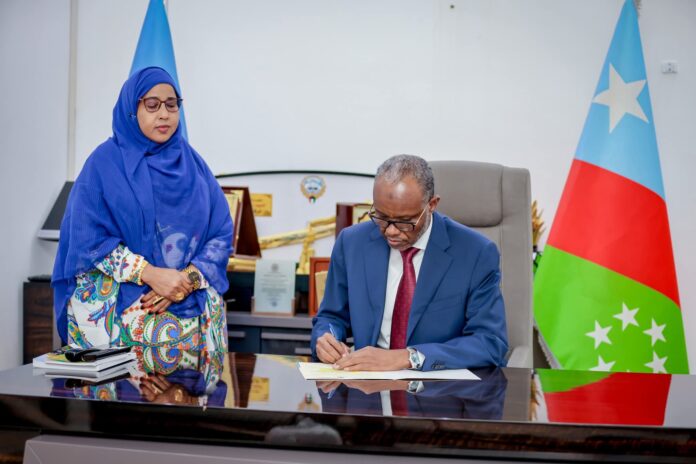
Somalia’s South West State President signs law banning female genital mutilation, protecting girls and women from harmful practices.
Somalia’s South West State President, Abdiaziz Hassan Mohamed Laftagareen, has officially signed into law the Prohibition of Female Genital Mutilation (FGM) Bill, a landmark move aimed at safeguarding the health and rights of girls and women in the region. The legislation was drafted by the Ministry of Women and Family Affairs and seeks to completely outlaw the harmful practice.
The bill is designed to protect girls and women from life-threatening complications and human rights violations associated with FGM. Speaking after signing the law, President Laftagareen emphasized the government’s commitment to human rights, saying, “This law reflects our dedication to safeguarding our daughters and ensuring they grow up healthy and free from harmful practices. It is now the responsibility of the entire society to support its implementation.”
President Laftagareen also highlighted the need for community awareness campaigns, urging collaboration between government bodies, local leaders, and civil society to educate the public about the dangers of FGM. Minister of Women and Family Affairs, Shamsa Mohamed Yarow, called on all stakeholders—including religious leaders, elders, and community members—to actively participate in enforcing the law and eliminating harmful traditions affecting women and girls. She said, “This is a historic step forward for the protection of women and children in South West State. Implementation and public cooperation will be key to its success.”
The new law is hailed as a significant milestone in combating gender-based violence and promoting the rights and welfare of girls. It aligns with Somalia’s broader human rights commitments and international standards to end harmful cultural practices. The South West State government has pledged to ensure effective implementation of the law, supported by awareness campaigns, community engagement, and strict enforcement measures to guarantee a safer future for women and girls.