Somalia Election Commission Revises Mogadishu Results, Sparking Political Dispute
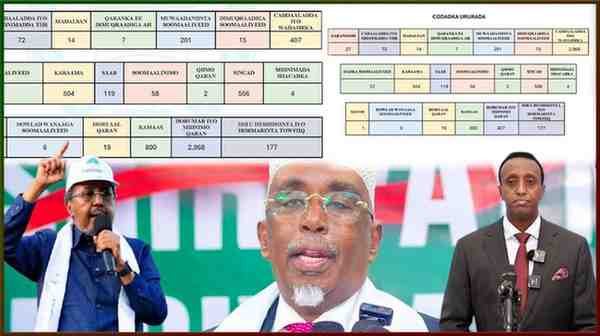
Somalia’s electoral commission revised Mogadishu’s Banadir council results, shifting thousands of votes to the ruling party and prompting opposition boycott threats and possible Supreme Court challenges.
Somalia’s National Electoral Commission has revised results from the Banadir regional council elections held this month, triggering fresh controversy after votes initially awarded to a party led by former South West state president Sharif Hassan Sheikh Aden were reassigned to the ruling party.
The dispute centres on Waaberi district in Mogadishu, where the Hormar iyo Midnimo Qaran party, led by Sharif Hassan, was first declared to have won 2,968 votes in the Dec. 26 local council poll. The commission later said the figure was the result of a technical error and that the votes in question belonged instead to the Justice and Solidarity Party (JSP) of President Hassan Sheikh Mohamud.
Under the revised results, Sharif Hassan’s party received 407 votes, while the previously announced total of 2,968 votes was reassigned to JSP, according to a subsequent statement issued by the electoral body.
The commission said the correction was made after internal verification procedures revealed a data-entry mistake. However, the Hormar iyo Midnimo Qaran party rejected the explanation and accused the commission of undermining the credibility of the electoral process.
Party officials said they were considering boycotting the remainder of the Banadir council election process and may challenge the results in court.
Reports have also emerged of complaints from other political parties, some of which said they are preparing legal petitions to Somalia’s Supreme Court over alleged irregularities.
The Banadir regional council elections, the first of their kind in Mogadishu in decades, are a key component of the federal government’s push to expand political participation and formalise local governance in the capital.
However, the controversy has raised questions over transparency and seat allocation mechanisms, with several parties saying the commission has yet to clearly disclose how many seats each party secured per district or the identities of winning candidates.