Somali Future Council Urges President Mohamud to Convene Talks as Election Dispute
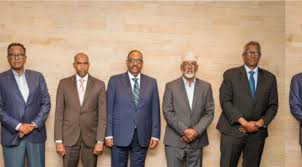
Somali Future Council Urges President to Convene Talks as Election Dispute Deepens
The Somali Future Council has once again called on President Hassan Sheikh Mohamud to convene all political stakeholders within one month in order to reach a consensus on a timely and credible electoral process, warning that failure to do so could plunge the country into a constitutional and security crisis.
The appeal was issued following a meeting of the Technical Committee of the Somali Future Council held in the northern city of Garowe. Members of the council emphasized the need for an inclusive political dialogue to resolve ongoing disagreements over the electoral model and ensure that elections are conducted within the constitutional timeframe.
According to the council, ignoring the call for dialogue could lead to a constitutional vacuum, heightened political tensions, security instability, and increased risks posed by extremist groups. The council stated that it is prepared to take steps toward facilitating an alternative election process should the current impasse persist, with the aim of safeguarding national stability and preventing a dangerous delay in the transfer of power.
The meeting in Garowe focused on outlining a roadmap for negotiations on Somalia’s electoral process, in line with the outcomes of the Kismayo conference, which emphasized consensus-building among federal and regional stakeholders. Council members stressed that only a broadly agreed electoral framework can protect the country from political fragmentation and institutional paralysis.
President Hassan Sheikh Mohamud, whose term is set to expire in less than six months, continues to push for a one-person, one-vote election, arguing that Somalia must move away from indirect clan-based voting systems. The president has repeatedly stated that the country will not revert to previous indirect electoral models.
However, opposition leaders argue that the current political and security environment does not allow for the successful implementation of universal suffrage within the remaining time frame. They insist that a negotiated and consensual election remains the only viable option to prevent further instability.
Opposition figures have reiterated their willingness to work with the president to deliver an improved electoral process compared to previous cycles, calling on him to engage in meaningful talks and return to the negotiating table. They maintain that dialogue, compromise, and political consensus are essential to ensuring a peaceful and legitimate electoral transition.
As Somalia approaches a critical political crossroads, the dispute over the electoral process has emerged as a defining challenge, with both sides facing mounting pressure to reach an agreement that preserves constitutional order, national unity, and security.