Israel opposition leader Yair Lapid criticizes PM Netanyahu over Somaliland recognition and U.S. visit.
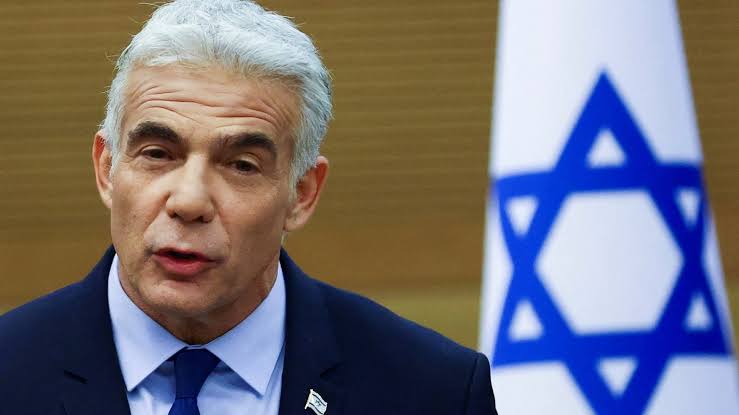
Israel opposition leader Yair Lapid criticizes PM Netanyahu over Somaliland recognition and U.S. visit.
Israel’s opposition leader, Yair Lapid, on Monday sharply criticized Prime Minister Benjamin Netanyahu for unilaterally recognizing Somaliland as an independent state, accusing him of bypassing government approval and risking Israel’s foreign policy credibility.
Netanyahu announced last Friday that Israel officially recognizes Somaliland, a breakaway region in northern Somalia that has declared independence since 1991 but remains largely unrecognized internationally. The decision immediately drew condemnation from several countries, including Turkey, Somalia, and a range of African and Middle Eastern nations, who warned that it threatens regional stability and violates international law.
Speaking to the Foreign Affairs and Defense Committee of the Knesset, Lapid said, “Israel has announced that it is the first country in the world to recognize Somaliland as an independent state. This decision was not approved by the government or the National Security Council; it was taken solely by the Prime Minister’s office.”
Lapid further criticized Netanyahu’s handling of regional affairs, noting that his recent visit to the United States lacked a clear policy on Gaza. “When the Prime Minister meets the U.S. President without a clear plan for Gaza, others will determine the outcome for Israel,” he warned, highlighting concerns over the strategic implications of unilateral actions.
The recognition of Somaliland marks an unprecedented move by Israel, which now joins a very small group of international actors engaging directly with the self-declared republic. Analysts say the step could have far-reaching diplomatic repercussions, straining Israel’s relations with Somalia, its ally Turkey, and other countries in the Horn of Africa.
Somaliland has operated as a de facto independent administration since 1991 but has struggled to gain widespread international recognition. Israel’s decision comes amid heightened diplomatic tensions, with Turkey reaffirming its support for Somalia’s territorial integrity and Somalia itself condemning the move as “null and void.”
The announcement has also ignited domestic political debate within Israel. Lapid criticized Netanyahu for acting without consensus and warned that the decision could undermine Israel’s standing in international forums. “Several countries have condemned this recognition. It demonstrates the absence of a cohesive foreign policy,” Lapid said.
The move is part of a broader shift in Israel’s foreign policy strategy in Africa, which includes deepening ties with select countries while navigating longstanding regional conflicts. Experts note that the decision could affect Israel’s relationships across East Africa, complicating security and economic partnerships.
Meanwhile, Netanyahu is scheduled to meet former U.S. President Donald Trump on Monday evening to discuss ongoing regional issues, including Iran and the next phase of the Gaza ceasefire agreement. The second phase of the agreement is expected to address the establishment of a provisional governing committee in Gaza, reconstruction efforts, formation of a peace council, deployment of international forces, Israeli troop withdrawals, and arms monitoring for Hamas.
The Gaza ceasefire, which took effect on October 10, followed two years of intense conflict that resulted in the deaths of over 71,200 Palestinians—most of them women and children—and left more than 171,200 injured. Analysts warn that the timing of Israel’s recognition of Somaliland may further complicate the region’s delicate security and political landscape.
As international reaction continues to unfold, Somalia, supported by Turkey and several African Union member states, remains firm in its stance that Somaliland is an inseparable part of its sovereign territory.