Somalia’s State Minister Responds to Trump’s Harsh Remarks in Diplomatic Rebuttal
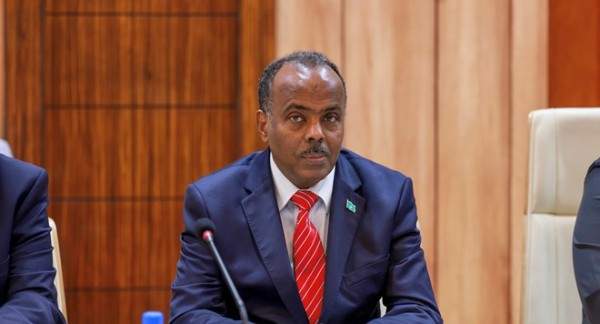
“For some people, it has become very easy to use Somalia as an excuse or to hide their own failures. This narrative is not only false, but it is also an insult to our resilience and our sacrifice. We must show unity, protect our dignity, and prove to the world that we are not something to be used or manipulated at someone’s convenience.”
Somalia’s State Minister for Foreign Affairs, Ali Omar Ali—widely known as Ali Balcad—issued a strongly worded statement that many observers view as a direct, albeit unnamed, response to U.S. President Donald Trump.
The minister’s message, published on his official X account, was interpreted as a diplomatic counter to Trump’s recent inflammatory comments, in which the U.S. president described Somalia as a “failed, rotting country” lacking effective governance, a functioning legal system, or a capable security force.
Ali Balcad’s statement was released shortly after Trump reignited criticism of Somalis in the United States and Somalia as a nation, prompting widespread backlash among Somali communities both domestically and abroad.
The exchange unfolded on social media—Trump’s remarks resurfaced in news cycles and online debates, while Ali Balcad’s response was delivered through his official X platform.
Trump’s renewed insults toward Somalia—including attacks targeting Somali-American communities and U.S. Congresswoman Ilhan Omar—triggered public anger and calls for an official response. The comments were widely condemned as degrading and harmful to Somalia’s national image. Ali Balcad’s statement appears designed to defend the country’s dignity, challenge misinformation, and reaffirm national unity.
Although the minister refrained from naming Trump directly, his carefully crafted language unmistakably addressed the allegations. In his statement, he wrote:
> “For some people, it has become very easy to use Somalia as an excuse or to hide their own failures. This narrative is not only false, but it is also an insult to our resilience and our sacrifice. We must show unity, protect our dignity, and prove to the world that we are not something to be used or manipulated at someone’s convenience.”
This diplomatic tone allowed him to respond firmly without escalating tensions, a strategy frequently used in international relations when addressing sensitive political rhetoric.
Somalia has long grappled with global narratives portraying it as unstable or ungoverned—a portrayal Somali leaders argue fails to recognize the country’s progress in rebuilding institutions and strengthening security infrastructures. Trump’s earlier tenure as president was marked by similarly harsh criticisms of African nations, including Somalia, which critics labeled as xenophobic and counterproductive.
In the U.S., Somali communities—particularly in Minnesota—have often been targeted during Trump’s political rallies and speeches. His latest remarks once again placed Somalia at the center of controversy, prompting renewed discussions about diasporic identity, diplomatic respect, and the broader implications for U.S.–Somalia relations.