President Hassan Sheikh Highlights Historic Importance of Benadir Regional Council Elections
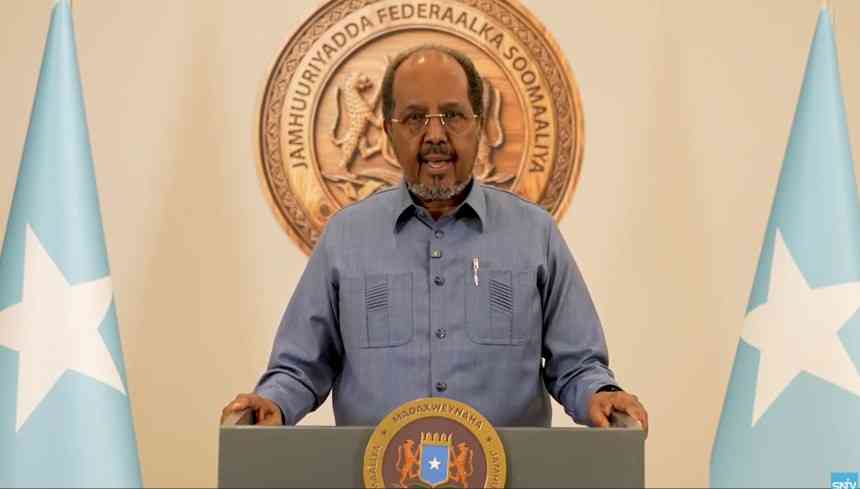
Somali President Hassan Sheikh Mohamud says the Benadir Regional Council elections in Mogadishu mark a historic shift from indirect rule to direct, constitutional voting, testing wider one-person, one-vote reforms.
Somali President Hassan Sheikh Mohamud has underscored the historic and constitutional significance of the Benadir Regional Council elections, describing them as a long-awaited milestone that paves the way for Somalia’s transition toward inclusive, people-driven governance.
In a public statement issued on Thursday, President Hassan Sheikh emphasized that the elections represent more than a local political exercise. He framed them as a symbol of a long-deferred national aspiration—the right of Somali citizens to participate directly in constitutional elections and shape their own leadership.
“The Benadir Regional Council elections mark a turning point,” the President said, noting that the process reflects Somalia’s steady movement away from indirect political arrangements toward constitutional democracy rooted in popular participation.
The President addressed registered voters in Mogadishu, urging them to turn out in large numbers and fully exercise their constitutional right to vote. He also acknowledged the role of state institutions, electoral bodies, and security forces involved in delivering the vote under challenging conditions.
The elections are taking place across 16 districts of the Benadir Region, centered in Mogadishu, on December 25, 2025. They represent the first time residents of the capital have been able to participate directly in local council elections after decades of indirect governance.
According to President Hassan Sheikh, the elections are a clear reflection of Somalia’s recovery in state-building, governance, and security, particularly in the capital. He argued that holding such a vote in Mogadishu—once synonymous with conflict and political paralysis—signals growing institutional stability and public confidence.
The President also stressed that the government invested significant time, political capital, and institutional effort to ensure the elections could take place, describing them as a cornerstone of broader reforms aimed at strengthening governance, accountability, and the rule of law.
The electoral process was enabled through sustained government preparation, coordination with electoral authorities, and heightened security measures to safeguard voters and polling centers. These efforts, the President noted, are part of a longer-term strategy to return Somalia to a democratic path based on citizen choice rather than elite selection.
For decades, Somalia relied on indirect electoral systems, where political leaders were chosen through clan-based or parliamentary processes. While these systems helped maintain fragile stability, they excluded ordinary citizens from direct participation. The Benadir Regional Council elections are widely viewed as a testing ground for broader one-person, one-vote elections envisioned under Somalia’s provisional constitution.
President Hassan Sheikh’s message was clear: this election is not just about local councils—it is about restoring ownership of the state to its citizens. While challenges remain and political consensus is not absolute, the Benadir vote stands as a defining moment in Somalia’s democratic recovery. Whether this momentum leads to nationwide constitutional elections will depend on what happens next, but for now, Mogadishu has taken a decisive step forward—one ballot at a time.