Mogadishu Votes at Dawn: Benadir Regional Council Elections Begin in a Historic First
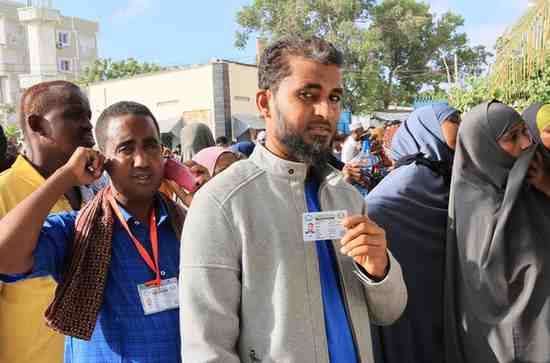
Benadir Regional Council elections began at dawn in Mogadishu, marking a historic first for the Somali capital and its regional administration. The vote is a key step in local governance.
Mogadishu woke up to history on Thursday morning as voting officially began for the Benadir Regional Council elections, marking a long-awaited milestone in Somalia’s fragile but forward-moving democratic journey.
For the first time, residents of Mogadishu are participating in local council elections, casting ballots to choose political parties that will form the Benadir Regional Council. A total of 390 council seats are up for grabs, contested by 20 political parties and associations, according to the National Independent Electoral Commission.
Polling is underway across 16 districts of the Benadir Region, with designated voting centers opening early in the morning. From Hodan to Karaan, voters queued patiently, some before sunrise—proof that civic duty still carries weight in this city that has seen more than its fair share of turmoil.
The election features 1,604 registered candidates, all competing under party lists rather than individual ballots. Voters are not selecting individual councilors directly; instead, they are voting for political parties, which will later be allocated seats proportionally.
Held on December 25, 2025, the vote comes after decades of indirect electoral systems, where clan elders selected lawmakers, lawmakers elected presidents, and the public watched from the sidelines. This election is widely seen as a critical step toward grassroots democracy, bringing governance closer to the people—literally, district by district.
Security across Mogadishu has been tightened to the maximum level. Armed security forces, backed by armored vehicles, are deployed along major roads and around polling stations. The federal government has also stationed large numbers of troops on the outskirts of the capital to prevent disruptions. As part of these measures, Aden Adde International Airport was temporarily closed, underscoring the seriousness of the security operation.
For years, Somalia—especially Mogadishu—has operated under non-direct elections, limiting public participation to indirect representation. This local council election opens a new political chapter, signaling a shift from elite-driven processes to people-centered governance. While imperfect, it is a foundational move toward accountability, service delivery, and local legitimacy.
That said, the process is not without controversy. Several opposition groups, most notably the Somali Salvation Forum, have boycotted the election, raising concerns about inclusivity, political consensus, and electoral fairness.
Despite criticism and logistical hurdles, many observers view the Benadir elections as a testing ground—a political pilot project for broader one-person, one-vote elections in the future. Success here could reshape Somalia’s democratic roadmap; failure could reinforce long-standing skepticism.
Today’s vote will not magically fix Mogadishu’s problems—let’s be real. But it does something just as important: it gives citizens a voice, however limited, in choosing who governs their neighborhoods. In a country where ballots once felt like distant dreams, Mogadishu is finally putting democracy on the street corner. Messy? Yes. Necessary? Absolutely. History doesn’t wait for perfect conditions—it moves when people show up. And today, Mogadishu showed up.