Somalia Appoints Gamal Mohamed Hassan to Lead Commerce: What You Need to Know
His reputation for independence and reform has earned him respect among younger Somalis and policy professionals, while his lack of association with major political scandals or divisive clan politics strengthens his standing as a unifying national figure.
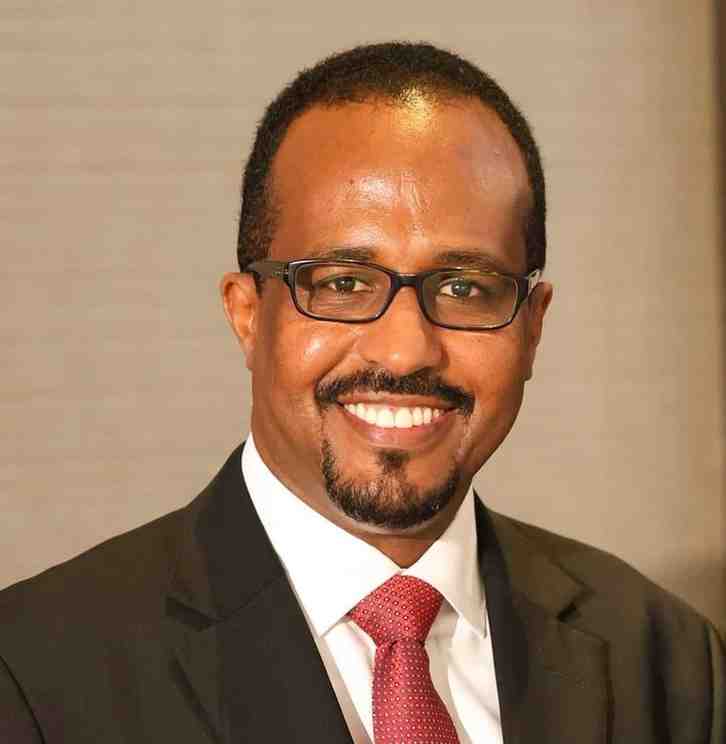
Somali Prime Minister Hamza Abdi Barre has appointed Gamal Mohamed Hassan as the new Federal Minister of Commerce and Industry, marking a high-profile return to the cabinet by one of Somalia’s most seasoned and internationally connected public servants. The move is widely seen as a calculated effort to inject experience, credibility, and reformist energy into Somalia’s stalled commerce and industrial recovery agenda.
The Prime Minister’s decision brings Gamal back into frontline government at a time when Somalia is reassessing how to revive trade, manufacturing, and domestic production after decades of conflict and institutional collapse.
Gamal Mohamed Hassan is no political novice. He previously served more than five years as Minister of Planning, Investment and Economic Development, making him one of the longest-serving ministers of that administration. He is also a former Member of Parliament and senior diplomat, with a career spanning national government, regional institutions, and global development bodies.
Until his appointment, Gamal served as a Director at the Intergovernmental Authority on Development (IGAD) and was named IGAD Special Representative for Climate Change and Environmental Affairs in 2022, a role that elevated his regional and international profile.
The appointment was announced in Mogadishu, Somalia’s capital, in mid-December 2025, as part of a broader effort by the federal government to recalibrate its economic leadership.
Gamal’s return is being interpreted as a strategic signal. Somalia’s commerce and industry sector remains underdeveloped despite improved security and macroeconomic reforms. By appointing a figure known for institutional discipline, assertive governance, and international engagement, the government appears intent on moving from policy promises to structural rebuilding.
His reputation for independence and reform has earned him respect among younger Somalis and policy professionals, while his lack of association with major political scandals or divisive clan politics strengthens his standing as a unifying national figure.
Gamal brings an unusually broad portfolio of experience. Diplomatically, he served as Somalia’s Ambassador Extraordinary and Plenipotentiary to Kenya, with concurrent accreditation to Seychelles, Comoros, and Mauritius. Earlier, he worked closely with the United States Special Representative for Somalia as a political specialist, and gained experience with the Government of Canada, Carleton University, the United Nations, the European Union, and the U.S. Embassy in Nairobi.
Academically, his credentials are equally robust. He holds a Bachelor’s degree in Political Science from Carleton University in Canada, a Master’s degree in Diplomacy and Foreign Policy from Moi University in Kenya, and a Master’s in Global Energy and Climate Policy from SOAS, University of London. He is currently pursuing a Ph.D. in Environmental Studies at the University of York, specializing in environmental economics and management—an increasingly critical field for sustainable industrial development.
During his tenure as Planning Minister, Gamal was known for taking politically risky decisions in the name of state-building. In 2018, he ordered international non-governmental organizations to relocate their offices to Mogadishu. In 2020, he imposed restrictions on organizations that continued to manage Somalia operations remotely from Nairobi. While controversial among some international partners, the moves reinforced federal authority and underscored his insistence on domestic institutional presence and sovereignty.
His appointment also comes against the backdrop of Somalia’s largely forgotten industrial past. Before the collapse of the central state, Somalia operated a diverse network of public industries: sugar factories in Jowhar and Jubba, dairy processing in Mogadishu, textiles, meat processing in Kismayo, cement production in Berbera, oil refining, pharmaceuticals, fertilizers, steel works, edible oil plants, and national printing facilities. These were supported by grain mills, fish processing plants, leather and footwear factories, gypsum and asbestos production, refrigeration and vegetable processing centers, and national electricity and publishing agencies.
This industrial ecosystem once underpinned food security, employment, construction, and basic consumer supply—before decades of conflict dismantled production capacity.
Gamal Mohamed Hassan’s return to the cabinet is more than a routine appointment; it is a statement of intent. By placing a globally experienced, reform-minded technocrat at the helm of commerce and industry, the Somali government is signaling a desire to reconnect the country’s historical economic foundations with modern, internationally informed policy thinking. Whether this appointment translates into tangible industrial revival remains to be seen, but for now, it has restored a measure of confidence that Somalia’s economic future is back on the national agenda—and in experienced hands.