Fuel shortages, price surge ground Mogadishu's tuk-tuks, stranding thousands of families
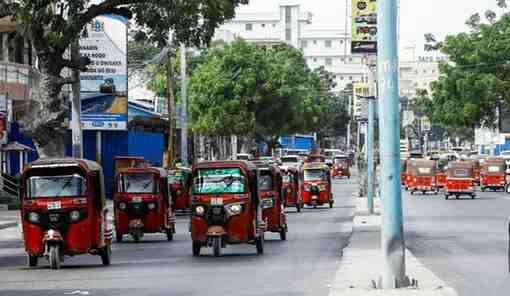
A severe fuel shortage and spiralling petrol prices in Mogadishu have forced thousands of tuk-tuk drivers to park their vehicles and abandon the livelihoods that sustained their families, as the ripple effects of the Iran conflict choke fuel supplies across Africa. With petrol prices more than doubling in the capital, the crisis has paralysed a transport sector that serves as the city's economic lifeline, leaving an estimated 50,000 dependents vulnerable and raising fears of wider urban disruption.
A crippling fuel shortage and a steep surge in petrol prices in Mogadishu have forced thousands of tuk-tuk drivers to park their three-wheelers and abandon the work that has long sustained their families, dealing a fresh blow to Somalia's fragile economy.
The crisis, which began intensifying over the past two weeks, has seen petrol prices in the capital more than double, pushing the cost of a litre beyond the reach of most drivers who rely on daily earnings to fill their tanks. Many now sit idle on street corners or have returned their vehicles to owners, unable to afford the fuel needed to operate.
"We used to make enough to feed our children and pay rent," said Abdi Nur, 34, who has driven a tuk-tuk in Mogadishu's Hamar Weyne district for seven years. "Now I cannot afford even half a tank. I have not worked in 10 days. I don't know what to do."
The disruptions come as African nations increasingly feel the ripple effects of the escalating Iran conflict, which has hit oil and liquefied natural gas shipments through the Strait of Hormuz — a chokepoint for about one-fifth of global energy supplies. Somalia, which relies almost entirely on imported refined petroleum products, has been particularly vulnerable.
Tuk-tuks — motorised rickshaws known locally as bajaj — are the lifeblood of urban transport in Mogadishu, offering an affordable alternative to taxis and filling gaps left by a battered public transit system. Industry estimates suggest there are upwards of 15,000 tuk-tuks operating in the capital, directly employing a similar number of drivers and supporting an estimated 50,000 to 70,000 dependents.
"These are not just drivers; they are the backbone of movement in this city," said Hassan Ali, chairman of the Mogadishu Tuk-Tuk Drivers' Association. "If they stop, students cannot get to school, workers cannot reach their jobs, and families cannot get to markets. The entire city slows down."
The fuel crisis has also forced up transport fares, with remaining tuk-tuks and taxis charging double or triple the usual rates, further squeezing households already grappling with inflation and the lingering effects of drought and conflict.
Somalia's federal government has not yet announced any emergency measures to address the shortages, though officials have privately acknowledged the severity of the situation. The Ministry of Commerce and Industry did not respond to requests for comment.
In a sign of growing desperation, some drivers have resorted to queuing for hours at filling stations that still have supplies, only to be turned away when stocks run out. Others are pooling meagre resources to buy small quantities of fuel to share among several vehicles.
"I have four children and a wife who depends on me," said Farhiya Mohamed, one of the few female tuk-tuk drivers in Mogadishu. "If this continues, we will have nothing. We are already skipping meals."
The strain on Mogadishu's transport sector echoes warnings from Nigerian billionaire Aliko Dangote, who said earlier this week that prolonged fuel disruptions could force work-from-home measures across Africa similar to those introduced during the COVID-19 pandemic — though for informal workers like tuk-tuk drivers, such measures offer little relief.
Neighbouring countries are also grappling with fuel-related turmoil. Mauritius announced energy-saving measures on Wednesday after a shipment failed to arrive, while South Sudan's capital, Juba, faces electricity rationing. Uganda has reported dwindling stocks and is exploring alternative supply channels.
For Mogadishu's tuk-tuk drivers, the immediate future looks bleak.
"I pray that this ends soon," said Nur, the driver from Hamar Weyne. "If not, I will have to leave the city and go back to my village. There is nothing else for me here."