From Security to Prosperity: Why US–Somalia Economic Partnership Matters Now
From Security to Prosperity: Why US–Somalia Economic Partnership Matters Now
For decades, US engagement with Somalia has focused rightly on security and stabilisation, not only for Somalia itself but for the wider region. Those efforts have saved lives, supported regional security and helped create the basic confidence required for economic activity to take root. Today, however, Somalia stands at a decisive economic turning point. The question facing Washington and American companies is no longer whether Somalia matters, but whether the United States will seize a fast-opening opportunity or allow others to shape Somalia’s economic future.
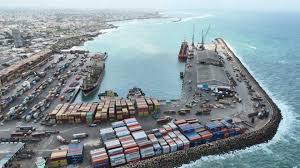
Somalia’s strategic geography alone should command serious attention. Located at the junction of the Red Sea and the Indian Ocean, Somalia sits astride one of the world’s most critical maritime corridors. A significant share of global trade, including energy supplies and manufactured goods, passes just off Somalia’s coast. In an era of disrupted supply chains and heightened geopolitical competition, access to reliable ports, logistics hubs and maritime services along this route is not optional. It is strategic. Somalia’s coastline, the longest in mainland Africa, offers unmatched potential for port development, shipping services, fisheries and regional trade connectivity.
The country’s economic assets extend far beyond geography. Somalia holds some of the richest fishing grounds in the Western Indian Ocean, yet only a fraction of this potential is currently developed. Livestock exports have long sustained the economy and remain in strong demand across Gulf and regional markets. Agriculture, particularly along the Shabelle and Juba river basins, offers immediate opportunities for productivity gains through modern inputs, storage facilities, processing and export-oriented value chains.
Energy is another frontier. Somalia is emerging as a serious prospect for both hydrocarbons and renewable energy. While exploration remains at an early stage, investor interest is real and growing. At the same time, Somalia’s climate gives it clear advantages in solar and wind energy. For US firms with experience in responsible extraction, renewable technology and strong compliance standards, Somalia offers a chance to enter early and help shape the sector in a sustainable and transparent way.
What makes this moment especially compelling is the direction Somalia is taking. Federal institutions are strengthening. Core economic and investment laws are being revised, with several already enacted. Debt relief and renewed engagement with international financial institutions have improved macroeconomic confidence. The Somali private sector, already one of the most dynamic in the region, continues to expand in telecommunications, finance, construction and logistics. Diaspora capital and expertise are flowing in, creating natural bridges to global markets, including the United States.
This is where American engagement becomes decisive. US companies bring more than capital. They bring technology, scale, governance standards and long-term investment models. These are exactly what Somalia needs and what distinguishes US firms from less transparent competitors. Early American commercial engagement would not only open new markets for US businesses but would also set standards that shape Somalia’s economic trajectory for years to come.
There is also a hard security reality that cannot be ignored. A safer and more peaceful Somalia means a safer and more stable Horn of Africa. Insecurity in Somalia does not stop at its borders. When Somalia is unstable, the consequences are felt quickly in regional capitals such as Nairobi, Addis Ababa and Djibouti. Trade routes are disrupted, illicit networks expand and security costs rise across the region. No amount of military cooperation alone can address these pressures without parallel economic development.
Economic engagement is therefore not a secondary track. It is a core pillar of stability. Jobs, investment and functioning markets reduce the drivers of conflict and extremism. Commercial growth strengthens institutions, increases state revenues and gives communities a direct stake in peace. For the United States, supporting Somalia’s economic rise is not charity. It is a strategic investment in regional security, maritime safety and long-term influence.
Time also matters. Somalia is opening up and global interest is growing. Other actors are already positioning themselves economically. If the United States hesitates, it risks ceding commercial ground and strategic influence in a region that directly affects global trade and security. Conversely, timely US engagement can secure partnerships, build trust and ensure that Somalia’s integration into global markets aligns with open, rules-based and transparent economic principles.
The path forward is clear. The US government can encourage trade missions, expand risk-mitigation tools and support regulatory capacity. American companies can explore opportunities in ports, energy, agriculture, fisheries and services with confidence that demand is real and growing. These steps do not require dramatic policy shifts. They require recognition that Somalia has entered a new phase.
Somalia is no longer defined only by its challenges. It is defined by its assets, its ambition and its strategic relevance. The United States is uniquely positioned to be Somalia’s preferred economic partner, building on years of political engagement and shared interests.
This is a moment the United States should not miss. Stronger US - Somalia commercial ties promise tangible returns for American companies, greater stability for a vital region and a partnership built on mutual benefit rather than dependency. For Washington and for US business, Somalia is not a risk to avoid. It is an opportunity to lead.