From Migrant to Minister: A Journey Across Labels
When Operation Restore Hope began, I wanted to join as a civilian. It didn’t happen. So I studied, convinced the chaos would pass, that we would one day go home to heal our country.
Yesterday, I sat on my final roundtable at the MEDays Forum, a session on “Migration and Security in a Fragmented World.” Seventeen speakers, each dissecting migration from a different angle. As I looked around the room, I realized I carried a perspective that could not be found in any report or policy paper:
I have lived every label we were debating.
I have been a migrant seeking refuge, a member of the diaspora dreaming of home, an expatriate with privilege — and now, perhaps, a transnational Somali, a global African, a citizen of the world.
Let me explain
Mogadishu, Before the Storm
I was born and raised in Mogadishu when the city was confident and clean — its avenues paved and neatly marked with zebra crossings.
Downtown pulsed with bakeries, restaurants, clubs, theaters, and at night, the sound of music spilled into the warm air.
The American, Italian, Egyptian, French, and Russian cultural centers were all within walking distance, and foreigners, some married to Somalis, lived among us in ordinary homes and apartments.
My childhood was measured in small, perfect rituals: walking to school, running errands to Haji Shire’s shop, playing with friends, posting letters in the red-and-blue mailbox across the street, and counting the days until Friday when we would head to Lido or Jazeera Beach.
That was Mogadishu (affectionately Xamar or Hamar), calm, confident, and full of promise.
After high school came National Service, a rite of passage that taught duty and discipline. Only then did I leave for Pakistan to pursue higher education.
And it was there, as a student far from home, that the Somali state collapsed.
A World Unraveling from Afar
News travelled slowly. I learned in fragments that Mogadishu had fallen apart.
When word finally came that my family had fled — crossing borders with no destination — I knew I could not go back.
Four years earlier, arriving in Pakistan had been a shock of new tastes, languages, and rhythms. After a month, I wanted to return home, but my father’s message was calm and final:
“You must finish your studies.”
So I stayed — suspended between two worlds — telling myself that, at least, my younger brother Raghe and I were safe. The questions were relentless: where to go next, how to support our family, how to begin again.
Across Borders and Labels
Six months after graduation, I landed in the United States, believing the hardest part was over. Before I could find work in my field, I had to survive.
I worked the night shift at gas stations and convenience stores. I was robbed twice, but never defeated.
My roommate Abdirashid Garhaye helped me find my footing — a quiet reminder that friendship is its own form of rescue.
Within a year, I was granted asylum. I became an asylee — a word both humbling and empowering.
Those first ten years in America were the most formative of my life. I became a permanent resident, secured better jobs, started a family, bought a house, and was admitted to one of the world’s finest universities.
I also became part of the Somali diaspora — a community of exile and endurance. We sent remittances, debated politics deep into the night, and dreamed of rebuilding our homeland.
When Operation Restore Hope began, I wanted to join as a civilian. It didn’t happen. So I studied, convinced the chaos would pass, that we would one day go home to heal our country.
The Expatriate and the Cynic
After completing my Master’s at Johns Hopkins SAIS — where Professors Zartman and Khadiagala reshaped how I understood power and negotiation — I joined the United Nations and was posted to Kenya.
Suddenly, I was no longer a migrant or a member of the diaspora. I was an expatriate.
I had privileges, per diem, and institutional legitimacy. Yet beneath the comfort, I felt an emptiness. The rhetoric of international development rarely matched the realities on the ground.
After two years, I left.
When 9/11 struck, I felt personally attacked. The country that had given me refuge, education, and a future was wounded. That day, I made a decision I had wrestled with for years: I applied for U.S. citizenship.
Coming Full Circle
Returning to Somalia in public service was overwhelming.
As Minister of Foreign Affairs, seeing the Somali flag among the banners of nations, hearing our anthem played, being received with full protocol — those moments felt like history exhaling.
Somalia was, once again, visible to the world.
And yet, pride coexisted with pain. Decades after my own departure, young Somalis still leave — driven by insecurity, unemployment, and the absence of justice.
How can we ask them to stay when the state still fails to give them reasons to believe?
Who I Am Now
I have lived under many labels — migrant, diaspora, expat — each imposed by circumstance or system.
Today, I claim a different identity.
I am a former migrant, grateful for the opportunities and citizenship I found abroad, but also a proud Somali who cannot accept that, thirty-four years later, our people still flee for survival and dignity.
Migration gave me perspective, but it also gave me purpose: to help make Somalia a home worth staying in.
Because in the end, the measure of a nation is not how many of its citizens leave — but how many dream of coming back.
Reflections on Mobility, Belonging, and the Meaning of Home.
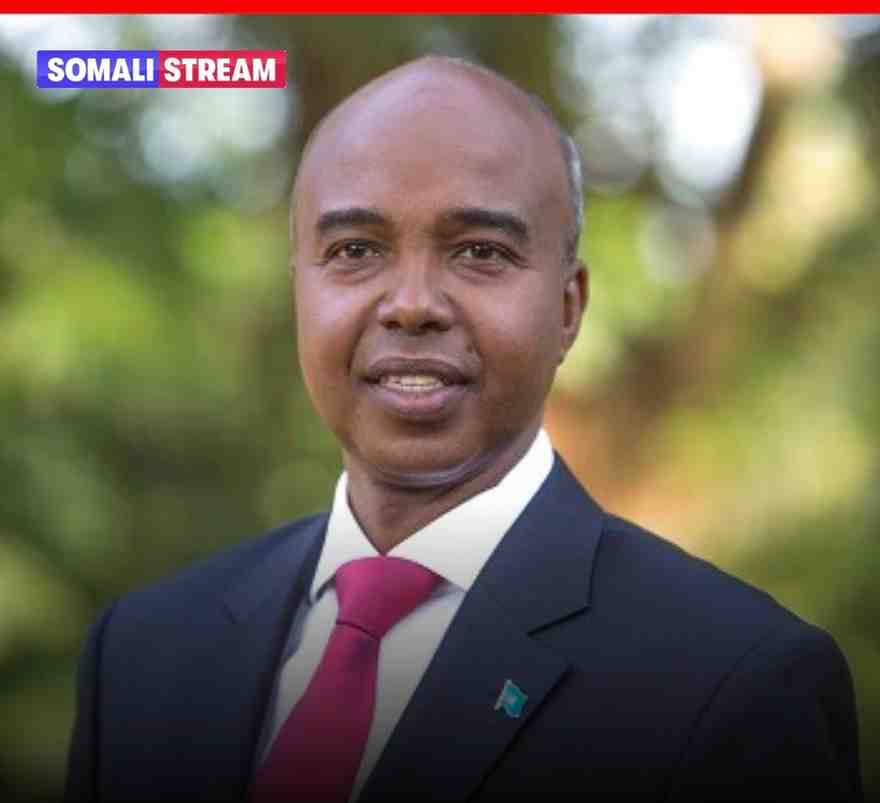
Mohamed Abdirizak is the Former Minister of Foreign Affairs, Federal Government of Somalia.