Kenya Police Deny Role in Somali Taxi Driver’s Killing in Garissa
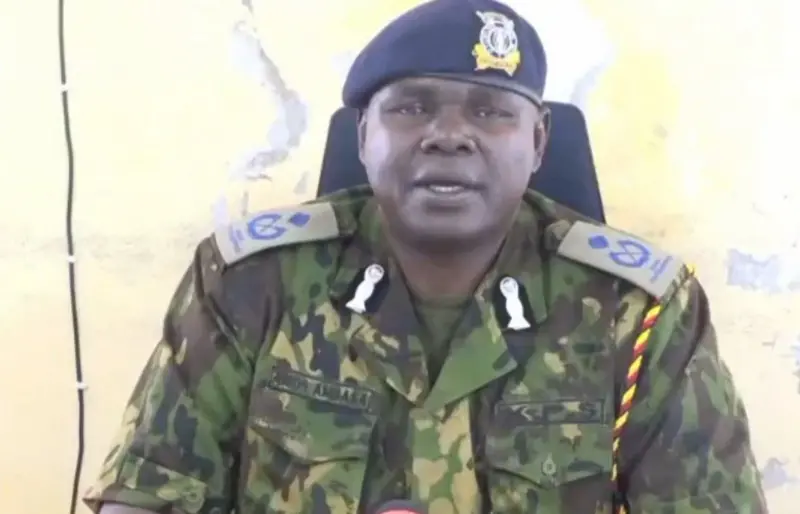
Kenyan police in Garissa deny officers shot dead Somali taxi driver Ahmed Sheikh Omar, insisting he died in a road crash as leaders demand an independent investigation.
Kenyan authorities have strongly denied allegations that security forces were involved in the killing of a Somali national, following the death of Ahmed Sheikh Omar, a 25-year-old taxi driver who was fatally shot in Garissa town on Sunday night.
The denial was issued by Amos Ambasa, the Garissa County Police Commander for Kenya’s North Eastern Region, who told local media that claims linking officers from the Rapid Deployment Unit (RDU) to the killing were “baseless and misleading.”
According to family members and local residents, Ahmed Sheikh Omar was shot dead while driving his taxi near the Modhikaarey area of Garissa. Witnesses allege that security officers opened fire on the vehicle, killing the driver instantly. Community leaders claim the deceased sustained a gunshot wound to the head, contradicting the official police account that his death resulted from a traffic accident.
The incident has drawn sharp reactions from local political leaders, human rights advocates, and the Somali community in Garissa. Among those speaking out was Member of Parliament Farah, who described Ahmed as a “widely respected and hardworking young man” and warned that the killing was part of a broader pattern of unresolved deaths involving civilians in the region.
On Monday, Garissa elders and elected leaders publicly demanded the arrest and prosecution of any officers involved, accusing police of attempting to misclassify the incident as a road accident.
Commander Ambasa presented a markedly different account. He stated that shortly after midnight on Sunday, officers stationed at a security checkpoint noticed a vehicle abruptly veer off the road upon seeing them. This prompted a brief pursuit.
Approximately 150 meters later, officers reportedly found the vehicle had been involved in a self-inflicted road crash, leaving the driver critically injured. Police say Ahmed later died from those injuries, not from gunfire. Two minors, both estimated to be around 15 years old, were allegedly found at the scene and questioned as part of the investigation.
Ambasa added that the case was immediately handed over to traffic police investigators, and the body was transferred to Garissa General Hospital mortuary for further examination.
Garissa, located in Kenya’s North Eastern region, has long been a flashpoint for tension between security forces and ethnic Somali communities, fueled by counterterrorism operations, allegations of profiling, and past incidents of extrajudicial violence. The killing has reignited public mistrust toward law enforcement, especially amid claims of evidence manipulation and lack of accountability.
Despite the police denial, pressure is mounting from community leaders, civil society groups, and human rights organizations calling for a transparent, independent investigation, including forensic analysis and witness protection.
At the heart of the controversy lies a single unresolved question: Was Ahmed Sheikh Omar the victim of a tragic accident—or an unlawful shooting later obscured by official narratives?
The answer will not only determine justice for one family, but will also serve as a critical test of public confidence in Kenya’s security institutions, particularly in a region where trust remains fragile and scrutiny is intense.