Surging Conflict in Middle East Triggers 77% Fuel Price Hike in Somalia
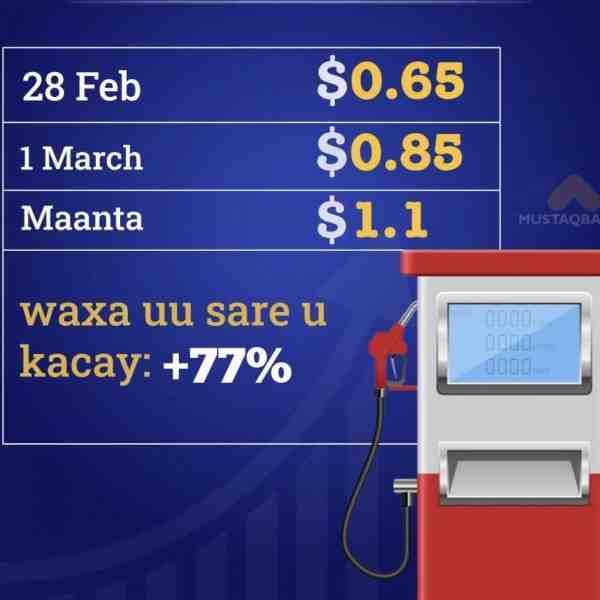
According to market observers in Mogadishu, the price of petrol has climbed from a stable $0.65 per liter earlier this week to $1.15 by Friday evening. The dramatic overnight surge has caught consumers and businesses off guard, raising fears of cascading economic pressure across the country.
Fuel prices in the Somali capital have skyrocketed by nearly 77 percent in a matter of days, as the expanding conflict between Iran and the U.S.-Israeli alliance sends shockwaves through global energy markets.
According to market observers in Mogadishu, the price of petrol has climbed from a stable $0.65 per liter earlier this week to $1.15 by Friday evening. The dramatic overnight surge has caught consumers and businesses off guard, raising fears of cascading economic pressure across the country.
As a nation that imports virtually all of its refined petroleum, Somalia remains highly vulnerable to disruptions in global supply chains. The latest spike is being driven by heightened instability in the Middle East, now entering its seventh day of active hostilities, which threatens key shipping lanes and refining infrastructure.
Industry analysts attribute the local price surge to several compounding factors:
- Increased Maritime Risk: Insurance premiums for oil tankers transiting the Red Sea and Gulf of Aden have risen sharply.
- Supply Chain Uncertainty: Ongoing hostilities have cast doubt on the stability of regional refineries and export terminals.
- Global Market Volatility: Fears of a prolonged war involving major oil-producing nations have fueled speculative trading and driven up crude prices worldwide.
The economic impact was immediately felt on the streets of Mogadishu. Public transport operators, including bus drivers and bajaj (three-wheeled taxi) owners, warn that the higher fuel costs will likely force them to raise fares, adding to the financial strain on ordinary citizens already grappling with inflation.
"I went to bed paying 65 cents for a liter, and I woke up to more than a dollar," said a local taxi driver. "If fuel costs more than what we earn in a day, how are we supposed to feed our families?"
Local economists warn that the ripple effects of the price hike could soon spread to other essential sectors. Should the conflict persist or intensify, Somalia may face rising costs for electricity and imported food items—both critical to daily life and economic stability in the country.